Dropping the Science

Times are tough for science communicators right now. We’re in the middle of a funding crisis, and folks are still taking advantage of grants for personal gain. There are domestic terrorist organizations which target graduate students doing animal research which is especially terrifying to me because I’m a graduate student doing animal research. Although there are new, effective science communicators taking prominent places in popular culture like Neil Degrasse Tyson there’s less science on TV than ever before with once great TV channels like TLC and The History Channel falling prey to bad reality shows and rank quackery. Heck, even the Discovery Channel caves in at the thought of a little controversy which is just about the worst thing for science.

Continue reading…

Share

GMOs used as pesticides in a brand new way!

A Colorado potato beetle. USDA photograph by Scott Bauer via Wikipedia.

I just returned from Reno, Nevada attending the Entomological Society of America’s annual meeting. I went to a bunch of really neat talks, saw some old friends and met some new friends. It turned out to be a great networking opportunity, and I met some folks doing amazing research I would really like to work with in the future. Unfortunately, I wasn’t presenting data because I missed the submission deadline but I was still fortunate enough to be on the debate team.

The topic of the debate was “can organic agriculture solve food scarcity problems?”. The subjects were randomly chosen and don’t necessarily support the views of those engaged in the debate, so I will not speak for anybody but myself. I was on the con team, and we were charged with arguing that organic agriculture is an inferior method of food production. We were up against a very good team and all day folks were coming up to us and telling us how much they enjoyed our debate. Ultimately, we won the best overall debate team and took home an engraved trophy and left the meeting $125 richer after splitting a $500 prize between the four of us.

My role on the team was to look into the pesticides used in organic agriculture and their treatment regimes. To my surprise, I found that organic operations actually increase the amount of inputs put into the environment by requiring higher concentrations and more frequent applications of pesticides. The insecticides used in organic ag are often less effective, less selective, and can have greater non-target effects than synthetic insecticides. Some organic pesticides, like the biopesticide Beauveria bassiana, are assumed to have a very low environmental impact quotient (EIQ), but haven’t been tested for potential ecological side effects. My position (and position on the debate team) is that GMOs like Bt corn are better for the environment because they decrease the amount of pesticides that we must put on crops and that organic pesticides are worse for the environment because they must be constantly reapplied in very high concentrations.

This, however, wasn’t the idea that earned me my stripes during the debate. During the Q&A session, somebody asked us to clarify why we thought organic ag was able to innovate to a lesser extent than sustainable or conventional agriculture. My response was that we can modify pesticides to become less toxic, more easily degradeable and more difficult for insects to detoxify by producing insecticides synthetically and making it more or less difficult for the insecticides to degrade. While organic ag could certainly benefit from new chemistries, they reject them as soon as modifications such as these take place because the new pesticide is synthetic. In short, organic producers are unable to take advantage of novel chemistries. I used the example of adding carbon atoms or benzene rings in a specific place to keep beta-lactam antibiotics medically relevant during the debate, but there was a much better example I could have used but unfortunately neglected to discuss. But, hey… that’s what the blogosphere’s for isn’t it?

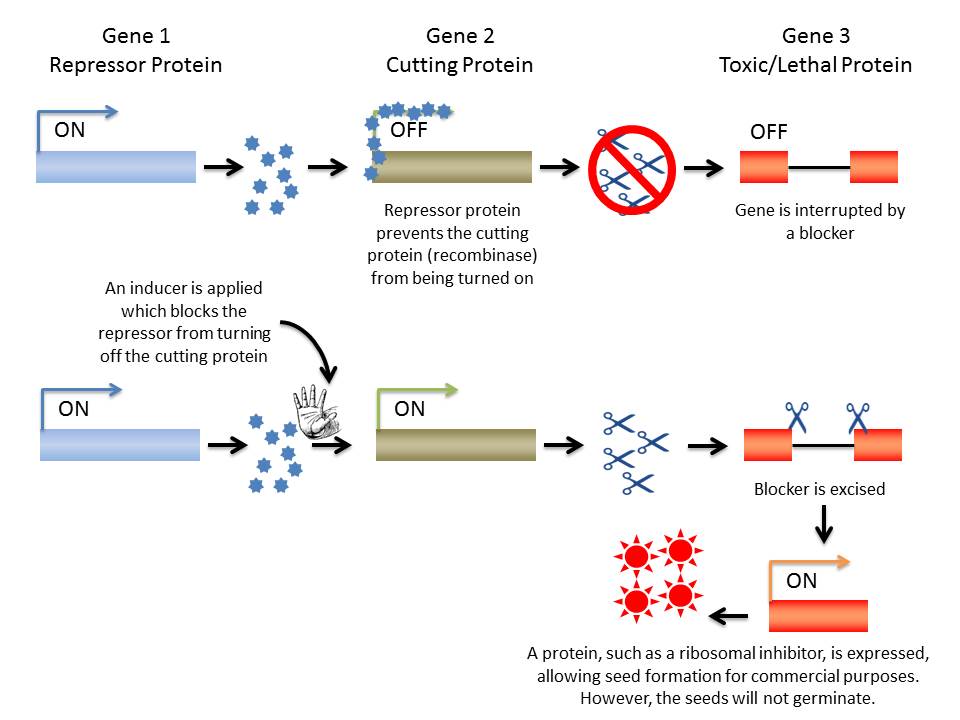
Very recently, the lab of Reddy Palli has figured out a way to genetically modify an organism to become a spray-on pesticide. To fully understand and appreciate what’s going on, there are a lot of things I need to explain. Fortunately, I’ve got about 12 hours of travel time ahead of me. Awesome, right?

Continue reading…

Share

41 Swedish plant scientists speak out against harmful EU regulation of modern plant genetics

Quasi-science prevents an environmentally friendly agriculture and forestry

(see original blog post here)

European legislation in the field of genetic engineering is so narrow that it blocks the ability of researchers to take progress from publicly funded basic research on plants through to practical applications. We, 41 scientists who have received funding for basic research on plants from the Swedish Research Council, urge politicians and environmental groups to take the necessary steps to change the relevant legislation so that all available knowledge can be used to develop sustainable agricultural and forest industries.
One of the “Grand Challenges” facing mankind is to find ways to provide food, fuel and clean water to a burgeoning population using agricultural and forestry practices that are environmentally and economically sustainable. Research on plants has made tremendous progress and we now understand well how plants grow, how they protect themselves against disease and environmental stress and what factors limit production in agriculture and forestry. The prerequisite for progress has been basic research, especially studies of plant genes.

Share

Fedoroff Letter to EPA raises serious concerns over EPA blundering

Sixty members of the U.S. National Academy of Sciences, comprising many of America’s most eminent biological scientists, and including Nobel Laureates Dr. James Watson and Dr. Gunter Blobel, have written to the US Environmental Protection Agency expressing  their concerns about recent EPA moves to change biotech crop regulations.

Professor Nina Fedoroff of the Pennsylvania State University is the lead protest letter signatory.

The biotech crop regulation changes mooted by the EPA were announced March 2011 in the Federal Register here (pdf).

Scientist co-signatories on the Fedoroff Letter say that the EPA is going down a troublesome path that is not based on science, and which will frustrate and delay innovations needed to provide farmers with better cropping methods.  Because of the delays and unneeded extra cost burdens such a  policy shift would create, it would surely undermine global food security.

The text of Fedoroff Letter is provided below (see here for the full original letter).

The EPA has made a rather cryptic and stiff reply to the Fedoroff Letter, and their formulaic response provides, as yet,  no clue that the scientist’s worries are not fully justified.

Nina Fedoroff has (together with Robert Haselkorn,and Bruce M. Chassy) written a very readable  editorial about this issue in the FASEB biology journal:
EPA’s Proposed Biotech Policy Turns a Deaf Ear to Science” (pdf). This great FASEB editorial fully explains the nature of the problem that is brewing with the current EPA policy direction.

Share

PHD comics the movie

If you’re a graduate student like I am, PHD comics is an essential source of comfort. Emotionally and physically, graduate work is difficult. You’re working long hours with little pay and often (but not always), little gratitude. There are reasons for this, but to get the job in the first place you’ve got to be bright and have at least some modicum of passion to get through it.

Continue reading…

Share
Login Register

About Biofortified

Biofortified's volunteer authors are devoted to providing factual information and fostering discussion about agriculture, especially plant genetics and genetic engineering. The site is written by grad students, professors, and guest experts. Meet our authors on the Authors page.

Support Biofortified

Frank N. Foode's Tweets