Written by Steve Savage

We Americans love sweet corn – our uniquely national vegetable. We consume ~9 lbs of sweet corn per person per year (see how that compares to other vegetables in the graph above). The farmers that grow this crop for us do so on a much more local basis than for most fruit or vegetable crops. There are significant sweet corn acres in 24 states and a total of >260,000 acres nation-wide for the fresh market and >300,000 for canned and frozen corn (see graph below). Sweet corn can be difficult to grow for many reasons, and is often sprayed with insecticides. A biotech solution to this problem exists, but it is under-utilized, in part, due to campaigns by anti-GMO activists. In the end, the people most hurt by this are the American sweet corn growers.

Why Sweet Corn Is Hard To Grow
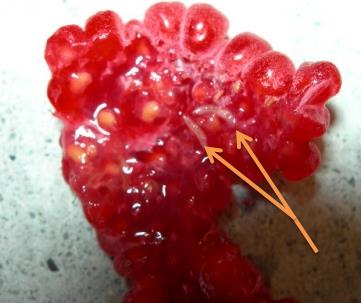
As popular as sweet corn is, growing this crop is extremely challenging for the farmer. There are lots of pests that love corn as much as we do – particularly the caterpillars (see picture below.) Farmers must spray the crop over and over again in order to deliver undamaged ears. At best a grower might need to make ~4 insecticide sprays/season. In some areas it can require 20 or more! One reason why so many sprays may be necessary is that the spray only does any good while the caterpillars are still outside of the corn plant. Once they get inside, they have an easy meal.

This Isn’t Our Problem As Consumers
All this insecticide use isn’t a consumer issue. Because the corn is husked, the USDA pesticide residue analysis of sweet corn almost never finds any detectable residues (even the misleading “dirty dozen list” says sweet corn is cool). The environmental impact of the spraying is closely regulated, but a reduced spray program would further mitigate that risk. For the farmer, however, the pesticide applications are a major headache, cost, and source of soil compaction because of the tractor trips. It is also hard for farmers to plant more than one or two staggered crops of sweet corn because the later crops are subjected to too much insect pressure.
The Biotech Solution That Has Been Little Used
Back in 1999, the ag technology company Syngenta began to offer a biotech, insect resistant option for sweet corn – corn that makes its own Bt protein. This protein is a natural, highly selective pesticide for the control of caterpillars (a protein that has been used on organic and conventional crops for >50 years.) This attracted very little public attention. Some of this Bt corn has been used in the Eastern US roadside market, but even though many growers would have loved to plant this corn, there were subtle messages from retailers discouraging them from doing so.
Late last year, another biotech sweet corn option from Monsanto was approved by regulators. This unleashed a predictable firestorm of anti-GMO activity. Even after 16 years of commercial biotechnology planting without health effects, and an impressive collection of independent safety data, the automatic opposition to the technology continued without a thought about how it affects the farmer. Anti-GMO activists put pressure on retailers knowing that their need for brand protection will easily trump any concern for the farmers – in spite of pledges for local sourcing. Certain chains immediately took the easy course and said they would not purchase biotech sweet corn. Walmart has now become the main focus of the anti-GMO sweet corn effort.
Who Loses Here?
Of course the only real losers in this scenario are the farmers. They could have had the option to grow the crop with far fewer sprays, but with all the flap, they will hesitate. There will probably be very little GMO sweet corn again in 2012, and the anti-GMO camp will declare victory as they have done with potatoes and wheat in the past. I’ve read dozens of missives on this subject from anti-GMO groups and not one has ever even broached the idea of how the technology could benefit exactly the sort of seasonal, small scale, local farmers they claim to support. (Read a farmer’s perspective here).
Why Were There Ever GMO Sweet Corn Options In The First Place?
It is actually quite unusual for a crop as small as sweet corn to be genetically engineered. The cost of going through the development and regulatory process makes that too expensive for all but a few crops. The only reason that biotech sweet corn was ever even offered as an option is its history. Corn was, of course, a crop that began in the Americas. It was domesticated by the inhabitants of Mexico 14 thousand years ago from a wild species called Teosinte that doesn’t even look like modern corn. Later American corn farmers found that if you picked this “field corn” when it was immature, it was a sweet, tasty treat. The problem was, as my grandfather always said, you had to have the water boiling to cook it before you picked it, because the sugar was quickly converted to starch.
Useful Mutations
In the 1980s, two mutations of corn were found that allowed it to become more than a farmer’s or gardener’s option. One stopped the conversion to starch so the corn would stay sweet long enough to get it to stores. The other made the kernels more tender. Once these had been bred into the, now “heirloom” varieties like “Illini Extrasweet,” the commercial sweet corn business grew significantly (see graph below).

Sweet Corn is Still Corn
People worry unnecessarily about “genetic contamination,” from GMO crops, but the truth is that plants (like animals) can only make genetic crosses with extremely closely related organisms. Sweet corn is still the same species as field corn, so the companies that went through all the expense to generate and register GMO field corn lines were able to “back-cross” those traits into sweet corn at a practical cost. That is really the only reason that such a relatively minor crop ever became a candidate for biotechnology improvements.
That artifact should have been a great boon to sweet corn farmers, but the most likely scenario is that “food movement activists” who think they are battling with corporations are actually just denying mostly small-scale, local farmers a way to make their job easier. They are trying to enlist you, the consumer in that effort. Whose side will you choose? The farmers or the activists? Will you even get the option to “vote” or will activists simply prevail again?
Graphs by me based on USDA-NASS Data. Corn Earworm Image from Texas A&M. You are welcome to comment here and/or to email me a savage.sd@gmail.com
Written by Guest Expert
Steve Savage has worked with various aspects of agricultural technology for more than 35 years. He has a PhD in plant pathology and his varied career included Colorado State University, DuPont, and the bio-control start-up, Mycogen. He is an independent consultant working with a wide variety of clients on topics including biological control, biotechnology, crop protection chemicals, and more. Steve writes and speaks on food and agriculture topics (Applied Mythology blog) and does a bi-weekly podcast called POPAgriculture for the CropLife Foundation.



I fail to see any data supporting your position that anti-GMO campaigns have frustrated and hurt sweet corn producers.
Was there a survey of sweet corn growers asking them why they weren’t using Bt sweet corn that has been on the market for over a decade? That “all the flap” impacted their choice of seed? Yes, you point to recent campaigns like the one on Walmart – but this product has been on the market for 12 years with no specific anti BT sweet corn campaign….Lots of supposition but where is there actual evidence that growers aren’t using it out of fear of consumer rejection? Has ASTA done research into this to ask producers? There was a firestorm over papaya, but papaya producers transitioned. Are there other reasons that sweet corn growers might not have chosen BT seed – cost?
And while were on the subject of corn, why aren’t producers using GMO traits in popcorn?
Rita,
Data is hard to get. I tried. It isn’t as if there is a national sweet corn growers organization – it is highly decentralized. I had always thought it would be best to voluntarily label and explain the advantages, but coordinating that is not feasible. I have interviewed many sweet corn producers over the years at things like the Produce Marketing Association convention. It is no scientific survey, but a pretty consistent story.
Some growers in lower insect pressure areas have not used it because the pricing is driven by the areas where it would replace lots of sprays
Perhaps we can get some feedback from growers who find this post
Steve,
Do you have any data on the number of spray (insecticide) applications for sweet corn vs non-gmo field corn? Also, how would these compare to BT applications in terms of number of times and efficacy?
Traditionally, lots of field corn got almost no insecticide sprays except in higher pressure areas. Some damage is often tolerated. That is why when Bt field corn was first introduced in demonstrated what had been hidden yield loss. In these days of very high corn prices, they might get 1 or even two insecticide sprays.
Bt as a sprayable for sweet corn requires application every day during silking in many areas. It is short-lived in the sunlight and also because it is strictly contact (no systemic action), the emerging silk is always unprotected.
BT is not a contact pesticide. It must be consumed by the pest.
In Florida (a huge sweet corn state) the pesticide use is huge. When down in the sweet corn areas of the state yellow spray planes fly from the field to the airport, back and forth, each time bringing broad-spectrum insecticides into the environment. Tons. Scientists and sweetcorn breeders absolutely recognize how Bt sweetcorn would be of huge benefit to farmers and the environment.
Crap! I’ve been doing it all wrong! I eat waaay more carrots, broccoli, cabbage and greens (Chenopodium, Amaranthus, Urtica, Beta) than I’m supposed to!
It would be pretty interesting to keep track of how many pounds of each vegetable I eat per year! Couldn’t even do a one month sample, since I do eat somewhat seasonally. I think I’ve already hit 10 lbs of asparagus this year 😀 Sometimes dinner = asparagus, crusty bread, and a little protein like white beans or tofu.
I would also like to keep track because I’m sure we eat a great deal more than the average. There are, unfortunately, many people who eat very little in the way of fruits and vegetables. Overall consumption was increasing until around 2000 and has been flat since then
I will only eat organic sweet corn. Monsanto’s new abomination, GMO sweet corn, might even persuade me to give it up completely. Gotta love the law of unintended consequences courtesy of the patented seed pirates.
In the never-ending quest for increased yield, I believe the entire agriculture system has lost its way. It’s not about healthy food. It’s about pristine weed-free fields, fewer passes and filling the hoppers with mono-crop commodity grain.
When farmers are taking advise from extension office personnel, seed & chemical purveyors and other special interests, and are far removed from the ultimate consumer, I can understand their frustration. They’re taking advise from those desiring to profit from their decision rather that enjoy the quid pro quo of nourishing the earth and people via the practice of farming. Industrial ag ain’t farming.
Scott,
You have obviously bought into the whole raft of conspiracy theory thinking about biotech. Thats too bad because it seems to have taken you to a fear-based existence.
Oh, by the way, seeds and other plant-related products have been being patented for a very long time. Go to the US patent office website and do a search for plant-related words. That isn’t something that started with biotech, and it serves the same purpose as with any sector- it encourages investment and innovation. Good things by the way
You can find some articles on the history of plant patents collected here.
Weather it is bt corn roundup, ready corn, blue harvester silos,or BST when farmers are forced to rely on and become overly dependent on large corporations it hurts the small farmers we all love to champion Corporations should help farmers increase there profit margins not force farmers to increase use of costly of farm inputs which hurt profits
Brian, has a seed dealer forced you to buy a particular seed type or inputs? If so, do you care to share the details?
In the case of Bt, while the traited seed may be more expensive, fewer insecticides are needed and other inputs like fertilizer and herbicide are unchanged compared to non Bt. In the case of Roundup Ready, farmers have the option to spray at different times than they would be able to do otherwise, and may be able to avoid tilling. There are increased and decreased costs that may or may not even out depending on the situation. Farmers have to choose which type of seed to buy depending on their own needs. I have heard that non biotech options are reduced, but seed companies work on supply and demand just like every other business. They do retain non biotech seeds in their portfolios and as soon as more people start buying more of those, more will be offered.
They do. At least in the case of GM crops (I have to admit having utterly no idea what sort of controversy lies behind blue harvester silos)
Perhaps you can illustrate exactly how any of the technologies you mention have been forced on farmers and how they are detrimental. If you’re going to claim small farmers were hurt then please demostrate that they were.
Perhaps Brian will return to explain. In the meantime…
The blue harvester silos seem to have generated controversy since only wealthy farmers could afford them, and they were pushed heavily by salesmen, as described by this “unofficial tribute“. I guess companies shouldn’t try to sell things, or should sell things with a sliding scale for prices do they cost less for smaller farmers? Seems like envy to me. It happens. We all want things we can’t afford, whether we need them or not.
“In the end, the people most hurt by this are the American sweet corn growers.”
No, the people hurt most by this are the American GMO manufacturers.
“As popular as sweet corn is, growing this crop is extremely challenging for the farmer. ”
I grew corn last year. It was very easy. This year I’m going to grow a lot more. It’s not a challenging crop. Mine got 12-13 feet high.
“There are lots of pests that love corn as much as we do – particularly the caterpillars (see picture below.) Farmers must spray the crop over and over again in order to deliver undamaged ears. At best a grower might need to make ~4 insecticide sprays/season. In some areas it can require 20 or more!”
Yes, if you want unnaturally perfect looking corn you have to do unnatural things to get that. I sprayed zero times and far less than one percent of my ears have any bugs.
“For the farmer, however, the pesticide applications are a major headache, cost, and source of soil compaction because of the tractor trips. ”
If it’s difficult you are doing it wrong.
“It is also hard for farmers to plant more than one or two staggered crops of sweet corn because the later crops are subjected to too much insect pressure.”
Nature has limits? Oh noes!
“I’ve read dozens of missives on this subject from anti-GMO groups and not one has ever even broached the idea of how the technology could benefit exactly the sort of seasonal, small scale, local farmers they claim to support. ”
You can’t save the seed, legally or practically speaking. This isn’t farming, it’s modern sharecropping.
And weren’t you just alluding to the fact that this corn doesn’t have to be grown seasonally? How can a non-seasonal crop benefit those who don’t grow crops that don’t grow there out of season?
“(Read a farmer’s perspective here).”
MR RIGOLIZZO FARMS 400 ACRES. That’s not a small farm. That’s a huge farm. He also has served on the NJ Tomato Council and the like. He is anything but a small local seasonal farmer. Does he even really work the land himself, or does he have a bunch of illegal aliens do the actual work for him?
” Once these had been bred into the, now “heirloom” varieties like “Illini Extrasweet,” the commercial sweet corn business grew significantly (see graph below).”
Hybrids are never heirlooms. That’s how the definitions work. They are mutually exclusive.
And supersweet corn is disgusting, perfect for the modern palate, horrible for anyone with taste.
“That artifact should have been a great boon to sweet corn farmers, but the most likely scenario is that “food movement activists” who think they are battling with corporations are actually just denying mostly small-scale, local farmers a way to make their job easier. ”
I’ve talked to an awful lot of farmers at farmer’s markets…never met one that liked any GMO product. Never met one who didn’t think Monsanto was evil. Never met one who wanted to produce perfectly bug free produce. Met quite a few who were anti-GMO activists.
“People worry unnecessarily about “genetic contamination,” from GMO crops, but the truth is that plants (like animals) can only make genetic crosses with extremely closely related organisms. ”
There’s an important lesson there. It’s not possible in nature to cross very different species. In GMO you can cross a plant with an animal – very unnatural and far from proven. Given the fact that these changes are not lasting changes (Monsanto’s accurate defense against charges of gene pollution) – GMO is actually proven to fail, the whole point of crossing genes is to make lasting changes passed on to the future generations.
“They are trying to enlist you, the consumer in that effort. Whose side will you choose? The farmers or the activists? Will you even get the option to “vote” or will activists simply prevail again?”
There are at least ten major groups of concerned parties: anti-GMO farmers, pro-GMO farmers, anti-GMO activists, pro-GMO activists, pro-GMO corporations, pro-GMO academics, pro-GMO government agencies, anti-GMO consumers, pro-GMO consumers, undecided consumers.
Anti-GMO farmers and anti-GMO activists have major overlap. They are far from being mutually exclusive adversaries.
Of key importance to understanding the inaccuracy of Mr. Savage’s argument is the strong correlation between farm size and GMO views. The smaller the farm the more likely the farmer is to oppose GMO. The bigger the farmer the more likely they are to support GMO. I don’t have the means to do a scientific study, but based on my observations I would guess that 90% or more of farms with five acres or less are opposed to GMO, and that 90% or more of farmers with five hundred acres or more support GMO. A serious study would surely reveal a strong inverse correlation between farm size and pro-GMO support and activism.
Sincerely,
a 1/3 acre farmer
“I would guess that 90% or more of farms with five acres or less are opposed to GMO, and that 90% or more of farmers with five hundred acres or more support GMO. A serious study would surely reveal a strong inverse correlation between farm size and pro-GMO support and activism.”
Here is a serious study that is contrary to your hypothesis about GMO/farm size correlation:
http://epw.in/epw/uploads/articles/17418.pdf
The one thing about that article that sticks with me is that farmers in India tested Bt seeds on a small scale on their own farms. When it worked, they then proceeded to expand the technology to their entire cotton crop.
If you don’t take the time to read the whole article (as it does conflict with your world view), please at least read section 7 of the study which gives the conclusions.
Keep in mind that the average farm size is less than 5 acres.
..By the way, I work for Monsanto –see my profile for disclaimer
Critic
1/3 acres? Sounds like a large garden, not a farm. Remember that the homestead act that fostered family farms across th Midwest in the 1800 s gave each 640 acres. If we followed your model a huge portion of the population would have to farm
I think that American growers should not push the soil and environmental limits because mass production of corn has resulted food wastage. Obesity in America is on the rise and a study shows millions of can food is expired every year. Go green, eat less, waste not and go easy on the soil and pesticides.
This sounds like a marketing pitch to farmers to buy
gmo sweet corn seed as soon as the market is conditioned
to accept it, coming soon to a walmart near you?
Will walmart maintain the little white lie that the
gmo sweet corn on their shelves is the same as the
corn their customers had been eating without problems
or patents or intellectual property constraints?
Perhaps the farmers actually selling directly
to consumers realize gmo product is not marketable
to their customers.
Apparently the only way to sell gmo sweet corn is
to conceal the products details and slap a on sale tag
on the produce at your local walmart.
C’mon, give people you disagree with a little credit. Not every opinion that is positive about something that a company sells is a marketing pitch. You seem to be more upset about Walmart than you are at Steve.
Steve, Keep up the good work! I am a fourth generation family farmer, and I totally agree with your comments regarding GMO. It’s sad that so many people who are distant from a real farm, fall for the scare tactics from Hollywood, instead of trusting scientists/agronomists and farmers.
1/3 acre is NOT farming. Not even enough exposure to be taken seriously! I plant 3 to 6 acres a year, and that is not farming, either, but I do grow food for family and friends. When I can get a roundup ready, B-T sweet corn, I’ll plant it.
I am a 6th generation Texas sweet corn grower and I will NEVER plant GMO anything. Customers don’t like it and there is no way you are going to convince them to like it. There are other ways. Bt was an organic option that Monsanto hijacked. There are other tools in our organic tool box to use. Use something too much and nature will adapt. That’s how we got Roundup resistant pig weed.
The writer of the original story is obviously not a farmer (I am) and does not understand HOW biotech crops work or HOW they were made.
Let me explain BT and how it works. BT is a soil dwelling organism that have many different subspecies. Some of these subspecies have been found to produce large amounts of certain proteins that are toxic to lepidopteran species that feed on corn, cabbage, etc. The toxins that MOST companies focus on are Cry1A and Cry1C.
These two toxins, when ingested by the corn earn worm, are toxic to the worm. Feeding stops within a few minutes and the worm ultimately dies from the toxins causing the death of the cells in the digestive tract. For BT sprays the actual soil bacteria is fermented, similar to yeast. The fermentation process creates large amounts of the toxins AND live spores. The live bacteria spores, when ingested by the corn ear worm, rapidly produce and also work to kill the corn ear worm.
BioTech companies, looking to capitalize on technology they did not discover or invent, mapped the genome of the BT bacteria and isolated the genetic sequences that code for the Cry1A and Cry1C toxins. They then use chemicals, electricity, radiation and a virus to insert these bacterial DNA sequences into the corn plant.
The corn plant then produces the Cry1A and Cry1C toxins in every cell of the corn plant, from the ear to the roots. There is no way to remove the bacterial proteins from the corn ear. Husking will do nothing, like with traditional sprays, as the toxins are in every cell.
The remaining sweet corn trash in the field is also full of the toxins. In many ways the whole crop contains the insecticide. There is a very real environmental burden of these crops. The left over insecticide is left on the field after harvest. Most farmers no longer plow their crop under for soil conservation reasons (They don’t plant cover crops like organic farmers in most cases). This then leads to Cry1A and Cry1C toxins washing into waterways and marshes where water dwelling organisms are harmed.
Spraying BT toxins has a LOWER environmental burden and is SAFER for the public. BT spray is VERY cheap, much cheaper than the technology fees paid to biotech companies for their genetically modified crops.
GMO crops benefit the LARGE farmer, NOT the small farmer. If you no longer have to spray, then you plant MORE acres to make up the lower sale price of GMO crops. You become dependent on the Monsanto’s of the world since many of these “farmers” no longer know how nor have the equipment to raise crops in the traditional manner. Most farmers also do NOT spray their crops themselves. They pay the CO-OP to do it for them since the co-op can do it cheaper than the farmer.
GMO crops are NOT the way a small farmer is financially stable. Selling directly to public via farmer’s markets, CSA and other direct outlets will yield a 300% or more dollar return vs. growing for a processor. A dozen ears sold directly to the public will usually yield $5 to the farmer. The processor will pay less than $1 for the same amount (processors pay based on lbs, but you get the idea). So large farmers need to grow as many acres as possible to make ends meet.
Selling direct precludes growing GMO crops. ALL of my customers have asked if I grow GMO’s. ALL of the them. They don’t want it. For the price I am getting for selling direct, I am willing to pay the higher price of spray inputs, etc.
In summary, BT corn is falling out of favor anyway. There are resistant corn ear worms now due to the overuse of BT toxins in GMO crops. Conventional farmers are falling back on much more toxic sprays.
Organic farmers have largely shifted to planting only two crops per year starting as early in spring as possibly. They don’t use BT sprays anymore due to it never being more than 75% effective. Most now use Spinosad (another bacteria that works in a different manner than BTs) as it is more effective, has a residual and is still organic.
GMO crops are about CONTROL of the market. If a farmer can not sell his crop directly to the public for the better price, then GMOs are almost always required, not because he wants to plant them, but because he can’t make a living any other way.
Thanks for the spirited explanation, but Steve Savage does in fact understand how the crops work and are made.
There are also farmers who sell biotech sweet corn direct, and both market stand experiments and published studies show that people are willing to buy them, particularly if they are labeled as having reduced or eliminated insecticide use.
So if conventional farmers are “falling back on much more toxic sprays” then you agree that Bt crops are having a net positive environmental impact, right? You are saying that it is less toxic than these sprays, which it replaced. It sounds like you are trying to have it both ways – that it is both bad for the environment to adopt GMOs and bad for the environment to abandon them. Also, stacked traits exist which are more effective against pests that are showing signs of resistance.